Morocco eVisa Requirements for Pakistan Passport Holders
Traveling to Morocco offers Pakistani tourists a chance to explore vibrant cities, golden deserts, and rich cultural heritage. From walking through the colorful souks of Marrakesh to visiting the historic streets of Fes, Morocco blends tradition with modern charm. With the Morocco eVisa for Pakistan Citizens, travelers can plan their journey more conveniently and prepare for an unforgettable North African adventure filled with stunning architecture, delicious cuisine, and warm hospitality.
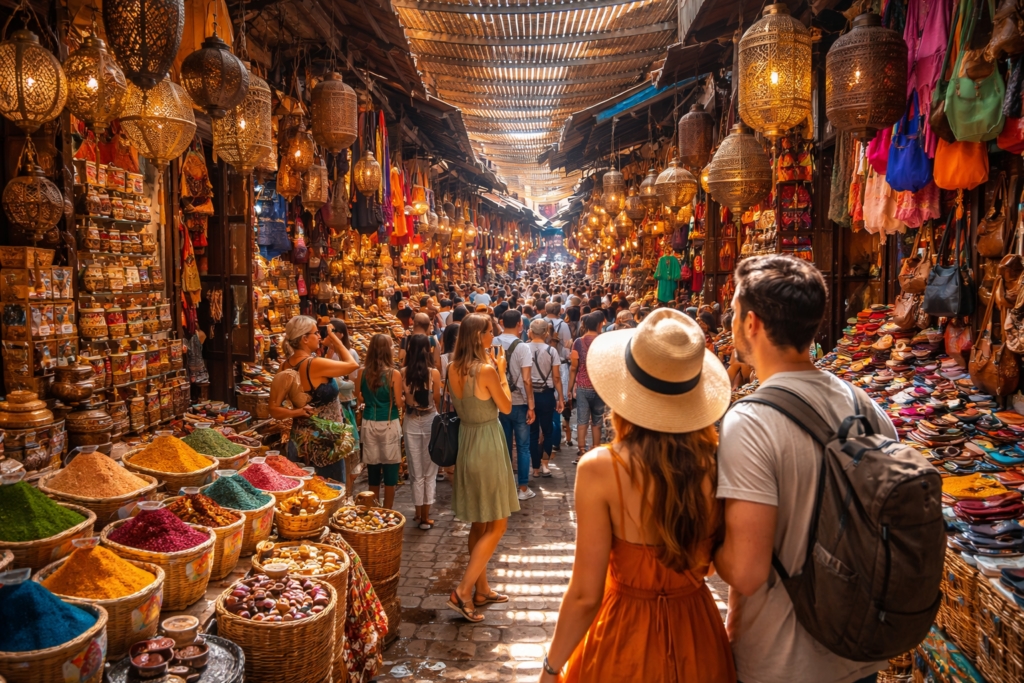
The Morocco eVisa for Pakistan Citizens makes tourist travel smoother by allowing applicants to complete the process online before departure. Once approved, visitors can explore beautiful coastal areas like Casablanca and enjoy the scenic landscapes of the Atlas Mountains. Whether discovering ancient medinas or relaxing by the Atlantic coast, Morocco promises a memorable and culturally enriching travel experience for Pakistani tourists.
What Are the Available Morocco eVisa Types?
Before you begin your application, it is crucial to understand which category fits your travel purpose. Morocco offers two primary electronic visa categories for eligible travelers.

What Documents Are Required for the Morocco eVisa?
To ensure a successful application, Kittitian and Nevisian citizens must gather specific digital documents. Having these ready in high-quality scans will prevent delays.
General Document Checklist:
- Passport Bio-Data Page: A clear color scan of your valid passport (must be valid for at least 6 months from the date of arrival).
- Recent Passport Photo: A professional, color photograph taken against a white background within the last six months.
- Proof of Status (Category Dependent): * Option A: A valid Residence Permit from specific countries (if applicable).
- Option B: A valid Multiple-Entry Sticker Visa from the US, UK, Schengen, Canada, or Australia.
Additional Requirements for Business Applicants:If you are traveling for professional reasons, you must also provide:
- An official invitation letter from a registered Moroccan company.
- Confirmation of meeting or event attendance.
- Documents proving ongoing business cooperation or partnership.
How Long Does the Morocco eVisa Processing Take?
The processing time for a Morocco eVisa depends on the urgency of your travel plans and the service level you choose. To avoid any potential issues, we strongly recommend submitting your application at least two weeks before your departure date. This buffer allows for public holidays, time zone differences, or requests for additional document verification.Applicants generally have three options for processing speeds. The Standard Processing service typically delivers an approval within 3 to 6 working days, making it the most cost-effective choice for those planning ahead. If your departure is approaching quickly, Rush Processing can secure your visa in 2 to 4 working days. For those with immediate or last-minute travel needs, the Super Rush Processing option provides the fastest turnaround, often resulting in an approved eVisa within just 1 to 2 working days.
How to Apply for Morocco eVisa Online?
The application process is entirely digital, eliminating the need to visit an embassy in person. Follow these steps:
- Fill the Form: Enter your personal details, passport info, and travel dates accurately.
- Upload Files: Attach the scans of your passport and supporting documents.
- Pay the Fee: Use a valid credit or debit card to cover the visa and service fees.
- Receive via Email: Once approved, the PDF eVisa is sent directly to your inbox. You must print this and carry it with you.
Who Is Eligible for the Morocco eVisa?
Travelers from many countries can apply for the Morocco eVisa if they meet certain basic travel and document requirements. This online visa system is designed to make short-term visits easier for tourists and business travelers who plan to enter Morocco for purposes such as tourism, attending meetings, or participating in events.
- Eligible Nationality: Applicants must hold a passport from a country that qualifies for Morocco’s eVisa program.
- Morocco eVisa requirements for Palau passport holders
- Morocco visa application for Panama nationals
- Morocco eVisa for Papua New Guinea citizens
- Morocco visa for Paraguay passport holders
- Morocco visa requirements for Rwanda passport holders
- Valid Passport: A passport with at least six months’ validity from the intended date of arrival is required.
- Purpose of Travel: Travel should be for tourism, short business trips, or family visits.
- Proof of Accommodation: Applicants may need to provide hotel booking details or an invitation letter from a host.
- Return or Onward Ticket: Evidence of departure from Morocco after the visit is usually required.
- Sufficient Financial Means: Travelers should be able to support themselves during their stay.
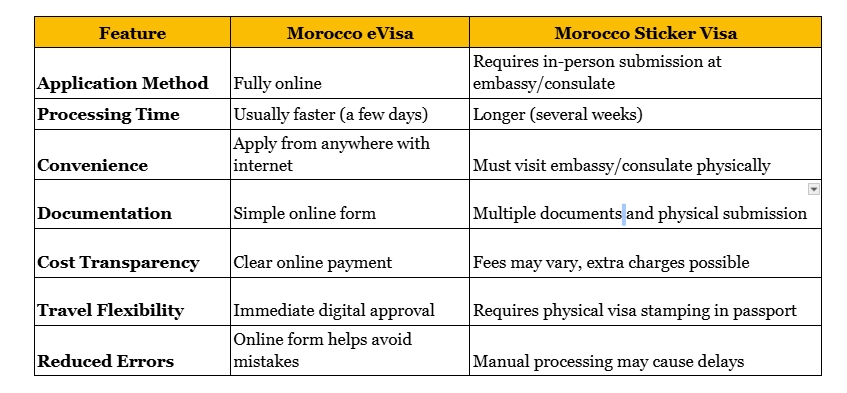
What are the Advantages of Applying for a Morocco eVisa Over a Morocco Sticker Visa?
The Morocco eVisa is an electronic travel authorization that offers travelers a faster, more convenient, and efficient way to visit Morocco compared to the traditional sticker visa. Unlike the sticker visa, which requires visiting a consulate or embassy, the eVisa can be obtained entirely online, reducing processing time and paperwork. It is particularly useful for tourists, business travelers, and short-term visitors seeking a smooth entry process.
What Is a Morocco Conference Visa?
A Morocco Conference Visa is a special type of short-term visa designed for travelers who intend to visit Morocco specifically to attend conferences, seminars, workshops, or professional meetings. This visa allows participants to engage in business-related events without requiring a long-term residence permit. It is ideal for international professionals, researchers, and corporate representatives who need to visit Morocco for knowledge exchange, networking, or official business gatherings.
- Purpose of Travel: Exclusively for attending conferences, seminars, workshops, or official professional events.
- Eligibility: Open to international travelers who have been formally invited to participate in an event in Morocco.
- Duration: Usually issued for the specific duration of the conference or event, with some flexibility for preparation and departure.
- Required Documents: Invitation letter from the conference organizers, valid passport, travel itinerary, and proof of accommodation.
- Application Process: Can often be applied for online through the Morocco eVisa system or at a Moroccan embassy/consulate.
- Travel Restrictions: The visa is limited to the stated conference period and does not allow for other long-term work or study activities.
What Plug Type is Used in Morocco for Tourists?
Tourists traveling to Morocco need to be aware of the plug types and electrical standards used in the country to ensure their electronic devices work properly. Using the correct plug type helps avoid damage to electronics and allows seamless charging of phones, laptops, cameras, and other gadgets during your stay.
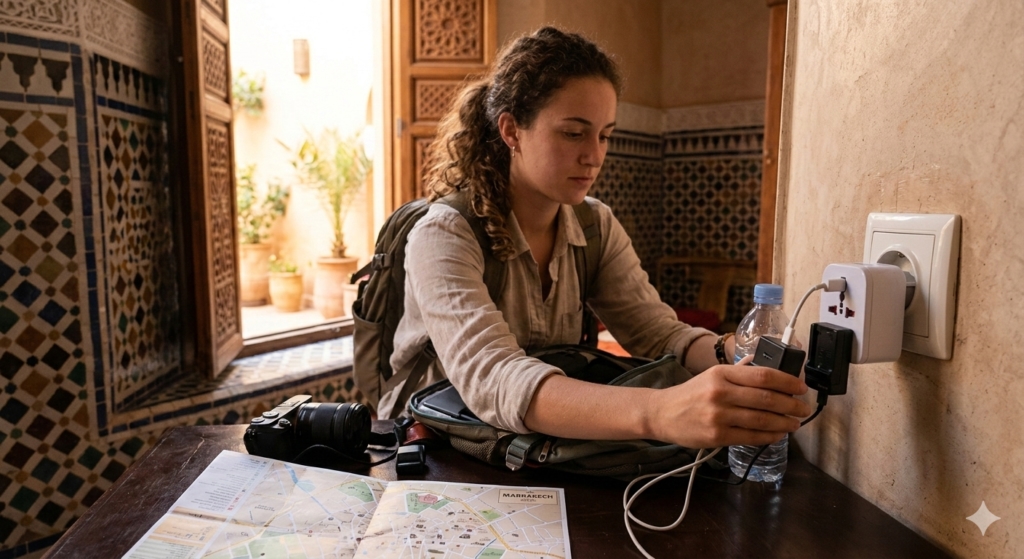
- Standard Plug Types: Morocco primarily uses Type C and Type E plugs for electrical outlets.
- Voltage and Frequency: The standard voltage is 220V, and the frequency is 50Hz, so travelers should ensure their devices support this voltage.
- Type C Plug:
- Also known as the “Europlug.”
- Two round pins.
- Compatible with many European devices.
- Type E Plug:
- Two round pins with a hole for the socket’s grounding pin.
- Often used in newer Moroccan buildings.
- Adapters: Travelers from countries with different plug types (like the US, UK, or Australia) will need a plug adapter.
- Voltage Converter: High-power devices may require a voltage converter if they do not support 220V.
When Is the Best Time to Visit Morocco with an eVisa?
Visiting Morocco with an eVisa can be a delightful experience, but timing your trip can make a huge difference. Here’s a clear guide on the best times to explore Morocco:
- Spring (March to May): This is one of the most popular times to visit. The weather is mild, flowers bloom across the country, and outdoor activities are comfortable. Ideal for sightseeing in cities like Marrakech and Fes.
- Autumn (September to November): Another favorable period. Temperatures are pleasant, avoiding the intense summer heat, and it’s perfect for exploring deserts, mountains, and coastal areas.
- Winter (December to February): Suitable for visiting southern regions or enjoying the Atlas Mountains’ snow activities. However, northern cities can be chilly and rainy.
- Summer (June to August): The inland and desert areas can get extremely hot, but coastal cities like Casablanca or Essaouira remain cooler.
Are There Any Alcohol Rules for Tourists in Morocco?
Yes, Morocco has specific alcohol rules that tourists should be aware of to avoid any issues during their visit. Here’s a clear guide:
- Availability: Alcohol is legally sold in licensed hotels, bars, restaurants, and some supermarkets, mainly in tourist areas. It is not widely available in local neighborhoods.
- Consumption: Drinking in public places, streets, or beaches is prohibited. Alcohol should be consumed only in licensed venues or private spaces.
- Age Restrictions: The legal drinking age in Morocco is 18 years. Tourists may be asked for identification in some establishments.
- Cultural Sensitivity: Morocco is a predominantly Muslim country, so showing respect for local customs is important. Avoid excessive drinking and public intoxication.
- Bringing Alcohol: Tourists can bring limited amounts of alcohol for personal use, but customs regulations must be followed.
What Emergency Numbers Should Morocco eVisa Travelers Know?
When traveling to Morocco on an eVisa, knowing the key emergency numbers can ensure safety and quick assistance in case of any unexpected situation. Here’s a useful guide:
- Police: Dial 19 for general police assistance anywhere in Morocco.
- Ambulance / Medical Emergency: Dial 15 to reach emergency medical services quickly.
- Fire Department: Dial 15 in most regions or 150 in some cities for fire-related emergencies.
- Tourist Police: In popular tourist areas, the tourist police can be reached at +212 537 20 99 99 for help with travel-related issues.
- Roadside Assistance / Traffic Accidents: Dial 177 for highway patrol and vehicle-related emergencies.
Is Travel Insurance Required for Morocco eVisa Holders?
Yes, travel insurance is highly recommended for Morocco eVisa holders, though it is not always strictly mandatory for entry. Having travel insurance ensures that you are covered for unexpected events such as medical emergencies, trip cancellations, lost luggage, or travel delays. Many travelers choose insurance that includes health coverage, as medical treatment abroad can be expensive. While Moroccan authorities may not routinely ask for proof of insurance at entry, carrying a valid policy gives peace of mind and can make dealing with emergencies much easier. For Morocco eVisa holders, having travel insurance is a smart precaution that enhances safety and confidence while exploring the country.
How Can I Book Taxis in Morocco After Getting My eVisa?
After obtaining your Morocco eVisa, getting around the country is easy if you know the right ways to book taxis. Here’s a guide for tourists:
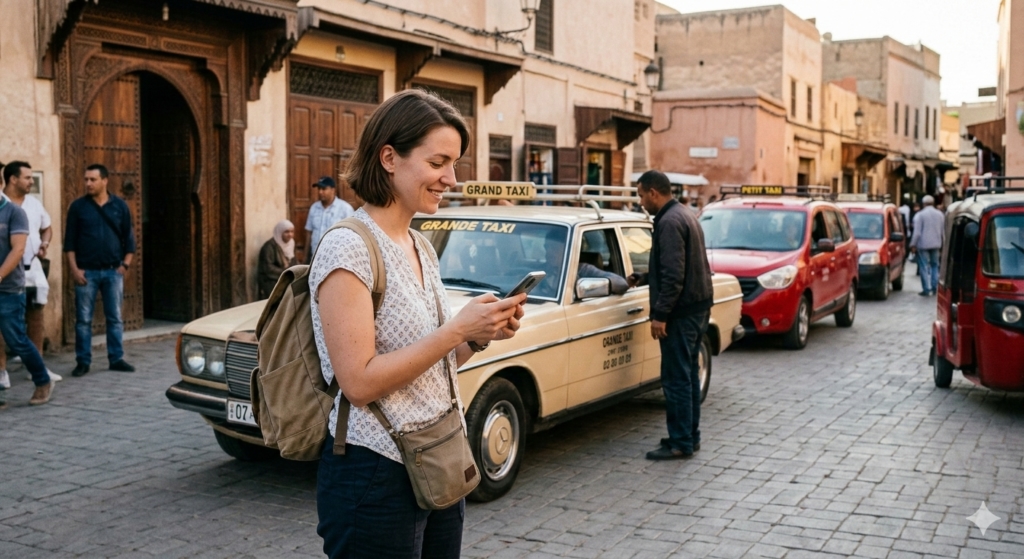
- Street Hailing: In cities like Marrakech, Fes, and Casablanca, you can simply flag down a taxi on the street. Ensure it’s a “Petit Taxi” (for city rides) or “Grand Taxi” (for longer distances).
- Hotel or Restaurant Booking: Many hotels and restaurants can call a trusted taxi for you. This is a safe and convenient option, especially at night.
- Taxi Apps: Some cities have ride-hailing apps like Careem or local equivalents, allowing you to book taxis directly from your smartphone.
- Agreed Fare: Always agree on the fare before starting your journey if the taxi doesn’t have a meter. This helps avoid misunderstandings.
Conclusion:
Obtaining a Morocco eVisa for Saint Kitts and Nevis citizens is a straightforward process that opens the door to an incredible cultural experience. By ensuring you have the correct supporting documents, specifically a valid visa or residence permit from a recognized third country you can secure your travel authorization quickly. Remember to print your eVisa, respect local customs regarding dress and alcohol, and always carry travel insurance. Morocco's blend of ancient history and modern hospitality awaits those who prepare their paperwork diligently.
Comments